Diesel bug is a generic name for the microbial contamination that grows in diesel fuel.
What is diesel bug?
Diesel bug is a generic name for the microbial contamination that grows in diesel fuel. It has become an especially troublesome form of fuel contamination since we started using biodiesel.
Diesel fuel now contains up to 7% biodiesel; this is great for the environment but not always good for organisations having to store fuel.
Biodiesel is hygroscopic; it holds and attracts water far more than petrochemical diesel. Attracting water is bad news for diesel fuel. It encourages the growth of diesel bug and leads to the formation of gums and resins which can stick to the side of fuel tanks and injectors. It can even cause layers of sediment to build up inside the tank.
This puts your critical power at risk.
Why are we only hearing about diesel bug now?
When we used petrochemical diesel we had few problems with the diesel bug. It thrives where it finds both water and diesel; petrochemical diesel does not attract water the way biodiesel does.
What are the different types of diesel bug?
The diesel bug is not a single type of organism. There are thousands of different types of bacteria, mould and yeast found inhabiting fuel systems. This kind of contamination is hard to predict as every system offers a unique environment.
There are broadly four categories of diesel bug:
Bacteria: single cell organisms, typically 0.3 to 60µm in size. A colony can double in size in 20-30 minutes. One cell can multiply into 2 million in 7 hours. Bacteria will degrade quality fuel over time.
Mould: a type of fungi with long multi-cellular filaments. There is little indication that mould degrades fuel but, due to the long strands, it does block filters.
Yeast: another type of relatively slow-growing fungi. It is typically 3-4µm in size.
Biofilm: a complex structure of microbes which adhere to the walls of the fuel tank and to each other. It begins to form when free floating microbes land on a surface and attach themselves to it. Given time, biofilms can grow many millimetres thick and produce a protective slime. Biofilms can excrete acid which can erode a metal fuel tank. Chunks of biofilm can slough off periodically, giving microbes the opportunity to infect other areas of the fuel system and block filters.
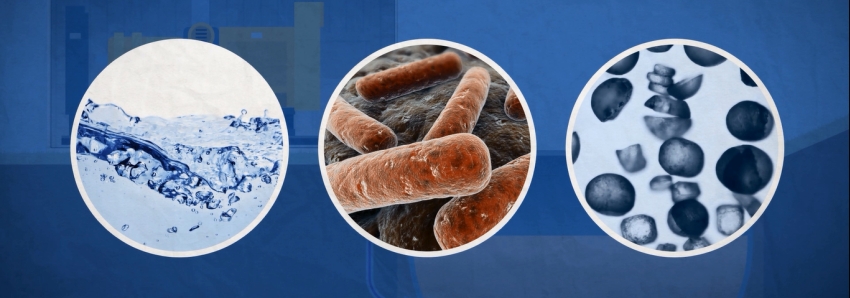
Diesel suffers from three main types of contamination: water contamination (left), microbial growth (a.k.a. the ‘diesel bug’) (centre), solid particulate contamination (right)
Do you find algae in biodiesel?
Algae are a form of plant life that require light to grow. Although you find many types of microbial growth in biodiesel, it is very unusual to find algae inside a lightless tank.
How can you stop diesel bug growing?
Prevention is always best. The key to maintaining fuel quality is good housekeeping. WASP recommends following a comprehensive fuel conditioning programme to ensure that your diesel-powered equipment runs reliably and economically. Effective programmes include four stages: testing, sampling, cleaning and stabilisation.
What can be done for tanks already infected with diesel bug?
We offer a comprehensive tank cleaning service that removes contamination that has grown beyond the level which polishing can clear.
Our site services address water, microbial and solid particulate contamination.
We always recommend full priming of the unit before operation and after servicing, even though some systems have safe priming capabilities.
When the system contains air and the filters and input pipe work are not completely full of fuel, the filters will need to be bled of air and system primed. The system does not automatically purge air, so it is the engineer’s responsibility to do so as described in later sections.
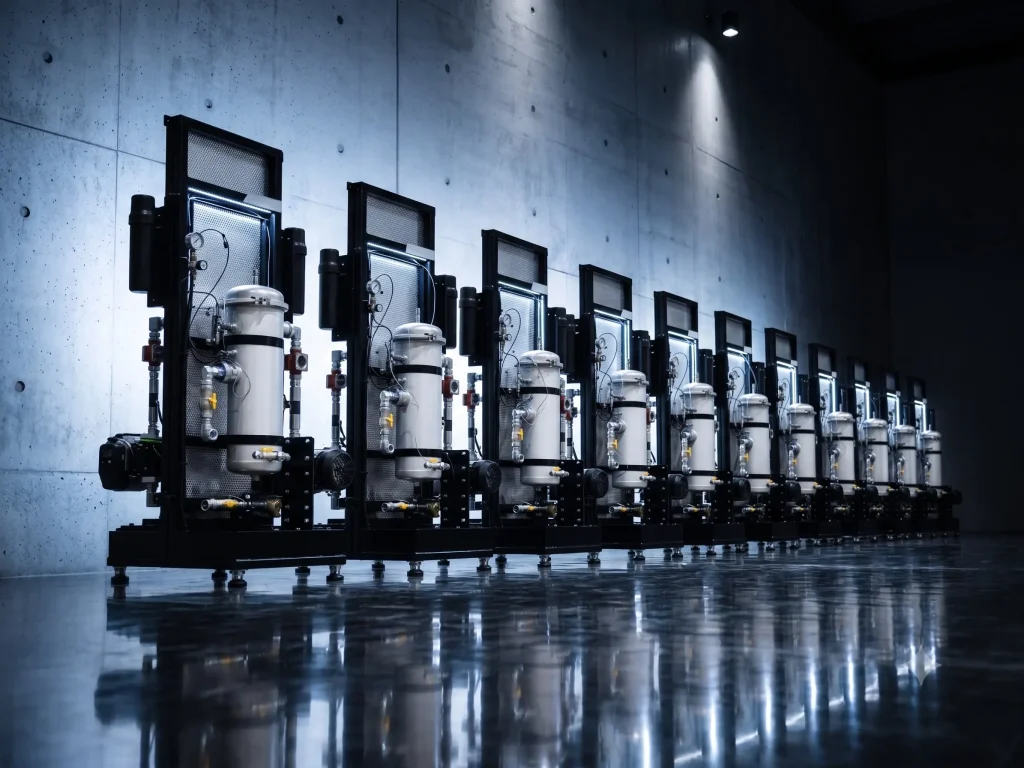
Sizing a fuel polishing system can be done in a number of ways; firstly WASP are always happy to help, so please contact us for any assistance you need.
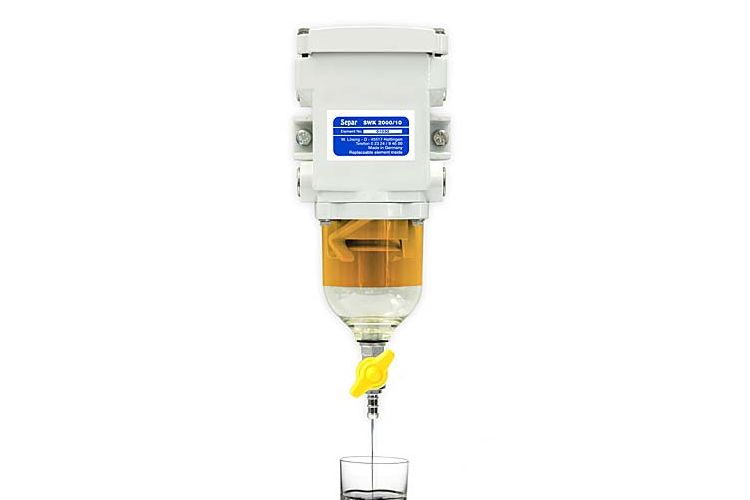
Both the grey and blue filters will isolate water collected from fuel. They each have sensors which trigger an alert when they reach a certain level and require the water to be drained. This can however be done regularly before the alert is triggered to avoid the machine stopping.