We sat down with IPU’s Engine Starting Divisional Director and asked him our most frequently asked questions in an engine starting Q&A session.
Why use an alternative to an electrical start motor?
Diesel engines in most applications and industries use the standard type electric starter motor as their method of primary starting.
However if environmental, application, safety or black-start conditions dictate that electrical power is unsuitable or needs a backup solution, IPU has fantastic alternatives.
What is black-start?
Black-start is an emergency condition when all primary and auxiliary electrical or alternative power has failed and a diesel engine (probably driving the emergency generator or fire pump) needs to be started.
An IPU black-start system requires no external power, being completely self-contained with the ability to start a vast range of diesel engines used in all environments, applications and emergency situations.
What system should I use?
To determine what type of starting system requires information related to the capacity of the engine, the application, hazardous or non-hazardous environment, extra load upon the engine, space envelope and client specifications.
IPU’s 40 years of experience helps us provide the correct system for any situation.
How does a hydraulic start system work?
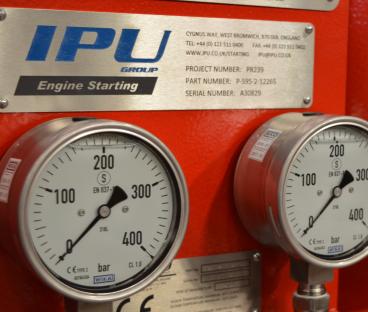
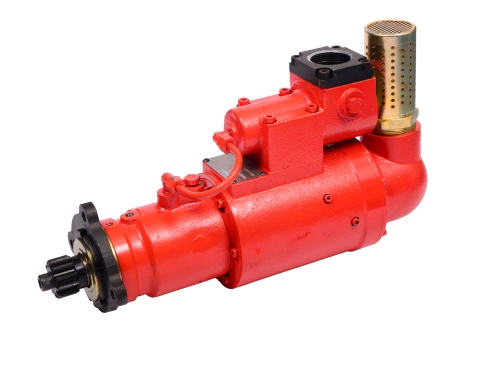
A hydraulic starter motor replaces the traditional electric motor and is powered by a hydraulic fluid. The “energy” is generated by the use of gas loaded accumulators that store hydraulic fluid against compressed nitrogen gas. The fluid is released into the hydraulic circuit via a control valve to the hydraulic starter motor to start the engine.
When would you use a hydraulic start system?
Because a hydraulic start system is always fitted with a hand-operated hydraulic pump for ultimate back up they are first choice for black-start applications.
Hydraulic systems are used on larger engines and applications that require longer cranking duration because the duration can be lengthened with the addition of more gas-loaded accumulators.
Hydraulic systems are ideally suited to hazardous areas where zoned or ATEX-approval is a requirement.
IPU’s hydraulic systems are compatible to an extensive range of engines and are suitable to all hazardous requirements.
How does a air start system work?
An air turbine powers the air starter and the required air to drive the turbine is either contained in a dedicated pressure vessel or utilizes the client’s compressed air supply.
The air starter is fitted to the air supply and via the correct system, the energy contained in the compressed air is transferred to the engine through the turbine and starts the engine.
When would you use an air start system?
Air starting is very flexible and therefore the commonest alternative to electrical starting.
Air starters and systems are available for a wide range of engines and applications. They are used in hazardous and non-hazardous areas and can be used in black-start applications but they require the addition of a dedicated air supply that in turn would require a hydraulic black-start system.
IPU air starters and systems are suitable for ATEX, oil & gas and mining applications.
How does a spring starter work?
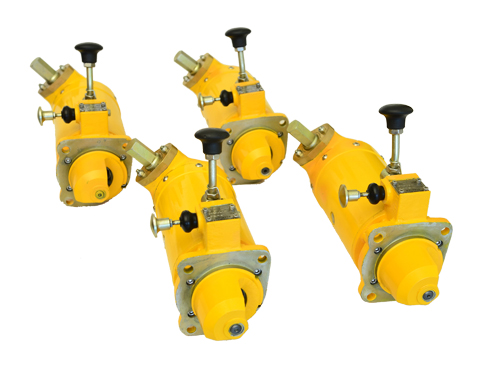
Spring starters are self-contained starter motors that generate the energy required via the compression of an internal spring. The spring is compressed manually and following engaging the pinion the energy is released via the pinion to start the engine.
Due the high amount of energy stored with the internal spring, a spring starter should never be bench operated and should always be operated with a load at the pinion.
Where would you use a spring starter?
As spring starters are completely self-contained they are ideal for black-start applications but are limited to smaller capacity non-electrically controlled engines.
Although spring starters provide a high amount of energy they release the energy very quickly but do not provide a great amount of cranking duration and are therefore not suited to electrically controlled engines that require several rotations to activate sensors.
They are ideal for lifeboat applications or black-start applications where only one starter pocket is available.
They are available for non-hazardous areas and some hazardous areas but this limited by the mechanical operation.
IPU Starting will correctly advise the starter and specification for all spring starting applications.
How does a nitrogen system work?
A nitrogen system is basically the same as the air system but the energy source is via high pressure nitrogen gas stored in high pressure vessels. The high pressure gas is fed into the air starter via a pressure regulator that reduces the high pressure nitrogen to the correct pressure required at the air starter.
The advantage of a gas system over a standard air system is the energy storage required is dedicated to the air start system and the duration of starting can be increased with the addition of pressure vessels.
The disadvantage is there is a finite limit to the air gas supply and the vessels will need replacing when they are exhausted.
Where would you use a nitrogen starting system?
Gas starting systems can be used in most areas but need a good supply of high pressure nitrogen vessels. They provide very good cranking power and duration and are available for hazardous and non hazardous areas. As with air starting, ATEX is available on all products.
What system is best suited for the oil & gas industry?
IPU specifies components and design systems to suit the specific requirements needed to meet the application.
All products specified are designed to meet current hazardous area ATEX requirements and are constantly updated to meet new specifications.
What systems are best suited in mining applications?
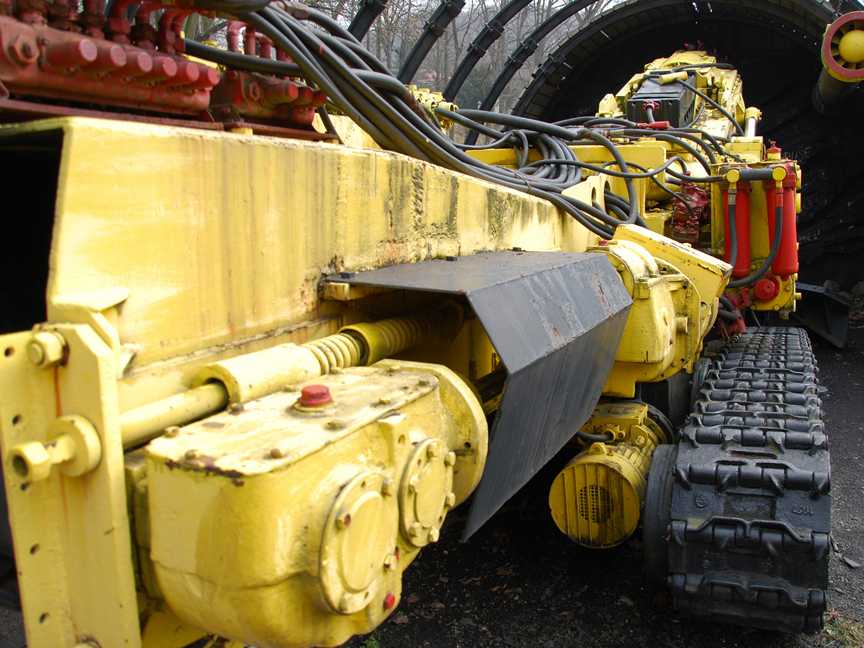
Air and hydraulic systems are the most commonly used in mining.
Critically, no aluminium must be present due the risk of a thermite reaction. To ensure this all critical IPU Starting air and hydraulic starting components are of a cast iron construction and conform to current hazardous area and ATEX requirements.
Share
11.09.20202 min read
Winter proof your fuel with IPU’s Diesel Defender fuel additive
IPU’s Diesel Defender Fuel Additive provides an all-in-one treatment for stored fuel. Keep fuel fresh and stable for up to…